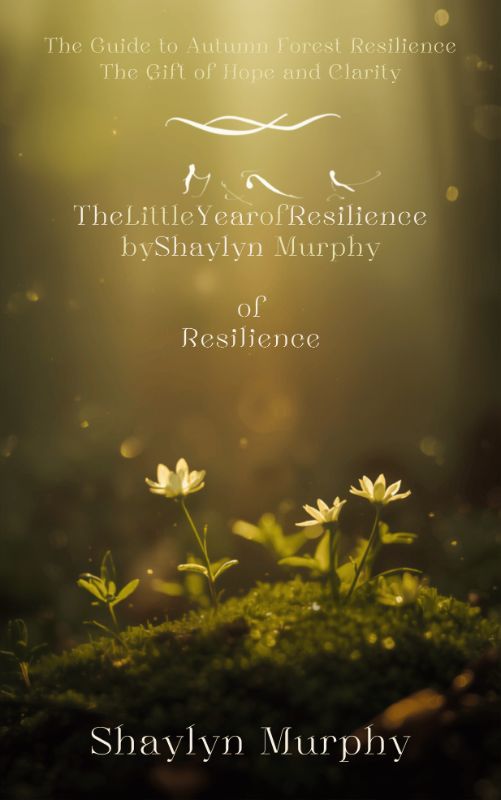
Resilience. The very word conjures up images of strength, endurance, and a quiet, unwavering persistence. It is a term used often in psychology, leadership circles, education, sports, and even in casual conversation, yet its true depth is seldom explored. In a world characterized by unpredictability, rapid change, and mounting pressures—from personal hardships to global upheavals—the ability to adapt, recover, and thrive amid adversity has never been more crucial. This book, “The Little Year of Resilience,” is a deep dive into the heart of what it means to be resilient, not as a distant, unattainable ideal, but as a practical and learnable set of skills, mindsets, and habits that can be woven into the fabric of everyday life.
The Need for Resilience
We live in an era marked by volatility—economies shift overnight, technologies disrupt established norms, and personal challenges often arise without warning. For many, the past few years have underscored the fragility of plans, the limits of control, and the necessity of inner fortitude. People have faced job losses, health crises, relationship breakdowns, and social isolation. These events, large and small, share a common thread: they test our capacity to respond, adapt, and ultimately move forward.
Yet, resilience is not merely about “bouncing back.” It is about transformation. The resilient individual does not return unchanged to who they were before adversity struck. Rather, they emerge wiser, stronger, and more resourceful. This is not an innate trait reserved for the few; it is a dynamic process that unfolds over time, shaped by intentional practice, self-reflection, and the willingness to grow through discomfort.
What Is Resilience?
At its core, resilience is the process of negotiating, managing, and adapting to significant sources of stress or trauma. It encompasses emotional, psychological, and behavioral flexibility. It is not about suppressing emotion or denying struggle, but rather about integrating the lessons of hardship, retaining hope, and continuing to act with purpose in the face of setbacks.
Resilience can manifest in many ways:
The parent who navigates job loss while still providing stability for their children
The athlete who rebounds after a devastating injury and returns to their sport
The entrepreneur who learns from a failed venture and launches again with renewed insight
The student who adapts to a new learning environment despite overwhelming challenges
Research in positive psychology, neuroscience, and behavioral science has shown that resilience is not a fixed characteristic. It is influenced by internal factors—such as mindset, emotional regulation, and self-efficacy—and by external factors, including social support, community, and access to resources. Understanding and cultivating these elements is the central mission of this book.
A Year in the Making
Why “The Little Year”? Because building resilience is not the result of a single grand gesture or moment of heroism. It is created in the accumulation of small, daily choices; in the quiet determination that tomorrow, you will try again; in the incremental shifts that, over the course of weeks and months, transform the very way you experience the world. This book invites you to embark on a journey—not of twelve months in the calendar sense, but of a metaphorical year, structured as a series of chapters, each designed to illuminate, challenge, and empower.
Each chapter functions as a distinct “season” or “phase” in the development of resilience. Some chapters will invite introspection and self-assessment, while others will be decidedly practical, filled with strategies and exercises. Throughout, you will find stories—realistic, relatable, and sometimes raw—of individuals and communities who have exemplified resilience in their lives.
The Structure of This Book
This book is divided into a clear, actionable framework. After this Introduction, you will find at least fifteen comprehensive chapters, each addressing a core aspect of resilience:
The Science of Stress and Adaptation
Mindset Mastery
Emotional Regulation
Purpose and Meaning
Building Support Networks
Resilience in Relationships
Physical Resilience
Cognitive Flexibility
Overcoming Failure
Resilience in the Workplace
Creativity and Problem-Solving
Self-Compassion and Acceptance
Resilience in Children and Families
Community and Collective Resilience
Sustaining Resilience: Lifelong Growth
Each chapter will guide you through the theory, provide real-world examples, highlight common pitfalls, and offer practical exercises or reflections to solidify your learning. The book concludes with a comprehensive section on integrating these lessons into a lifelong practice, ensuring that resilience is not just a temporary adaptation, but a permanent companion.
Who Is This Book For?
This book is for anyone who has ever faced adversity—big or small—and wants to emerge from it not merely unbroken, but transformed. It is for:
Leaders seeking to support their teams through organizational change
Parents hoping to instill resilience in their children
Educators committed to fostering grit and adaptability in students
Individuals navigating personal loss, health challenges, or uncertainty
Communities striving to recover from collective trauma
It is for those who recognize that while we cannot control every event that befalls us, we can choose our response. It is for the dreamer, the doer, the survivor, and the skeptic alike.
A Note on Hope
Throughout the pages of this book, you will encounter a recurring theme: hope. Hope is not mere optimism or wishful thinking. In the context of resilience, hope is an active, intentional commitment to the belief that improvement is possible, that pain can be transformed, and that adversity can be a catalyst for growth. Hope fuels resilience, and resilience in turn renews hope.
How to Use This Book
You may choose to read this book straight through, chapter by chapter, or you may wish to focus on the sections most relevant to your current circumstances. Each chapter is designed to stand alone, but collectively they offer a comprehensive roadmap for developing deep, sustainable resilience.
At the end of each chapter, you will find suggested exercises or reflection prompts. These are not mere add-ons; they are the heart of the work. Engaging with them will enable you to move from theory to practice, from insight to action.
I encourage you to keep a journal as you move through this book—record your thoughts, your struggles, your progress. Resilience is best built through mindful engagement and honest self-assessment.
The Promise of Resilience
The journey toward resilience is not linear. There will be progress and setbacks, moments of clarity and times of doubt. Yet, the promise of resilience is not perfection, but possibility. It is the assurance that, regardless of what the future holds, you possess the capacity to adapt, to learn, and to find meaning even in difficulty.
In the chapters that follow, you will be invited to question old assumptions, experiment with new approaches, and, above all, to treat yourself with compassion. You will discover that resilience is not about denying pain or suppressing emotion, but about integrating all aspects of the human experience—joy and sorrow, triumph and defeat—into a narrative of growth.
The world may not become less uncertain, but you can become more certain of your ability to face it. You can cultivate the skills, the mindset, and the community that will sustain you through whatever comes next.
Let us begin this little year together—step by step, day by day, chapter by chapter. The journey will not always be easy, but it will be worthwhile. For in learning to be resilient, we do not merely survive—we discover how to truly live.