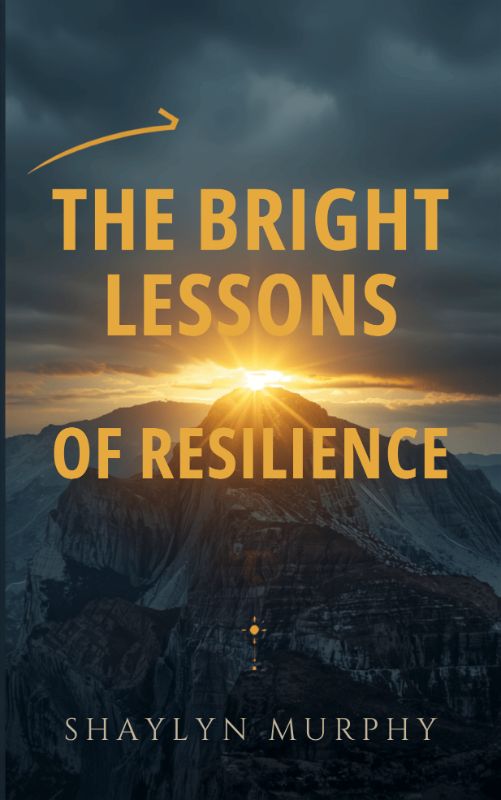
Resilience is the quiet strength that carries us through life’s inevitable storms. It is not merely the capacity to endure hardship, but the ability to emerge from challenges transformed, wiser, and ready to face the next wave with renewed vigor. Welcome to "The Bright Lessons of Resilience," a book meticulously crafted to illuminate the essential art of bouncing back and thriving, not just surviving, in the face of adversity. In these pages, you will discover that resilience is less about innate toughness and more about nurturing a set of attitudes, habits, and skills that anyone can learn and strengthen.
Unpacking Resilience: More Than Just Endurance
The concept of resilience is often misunderstood. It is sometimes equated with simple endurance—the ability to withstand pain, disappointment, or trauma. Yet, resilience is far richer and more dynamic. It is about adaptability, growth, and hope. Consider the image of a tree battered by fierce winds. A resilient tree does not stand rigid, resisting every gust; instead, it bends, flexes, and ultimately grows stronger from the experience. Similarly, resilient individuals do not merely “tough it out.” They learn, adjust, and ultimately find ways to flourish, even when life’s circumstances seem insurmountable.
Where does resilience come from? Is it a trait we are born with, or can it be cultivated? The answer is both nuanced and empowering. Scientific research, as well as centuries of lived experience, show that while some aspects of resilience may have genetic or early-life roots, the vast majority of what makes someone resilient can be taught, practiced, and refined. This book is your guide to mastering those lessons.
Why Resilience Matters Now More Than Ever
We live in an era of rapid change and constant uncertainty. From personal crises—such as health challenges, job losses, or the end of important relationships—to collective hardships like economic downturns, natural disasters, and global pandemics, adversity is a fact of modern life. The pace and unpredictability of contemporary existence can sometimes feel overwhelming. Yet amid the turmoil, stories emerge of ordinary people who face extraordinary trials and, rather than crumbling, grow into more compassionate, creative, and powerful versions of themselves. What sets these individuals apart? The answer lies in their resilience.
Developing resilience is not just about personal well-being; it is vital for the health of our families, communities, and societies. Resilient people are more likely to support others, recover from setbacks, and contribute positively even in tough times. In organizations, resilience is increasingly recognized as a key ingredient for innovation, leadership, and long-term success. At a community level, resilience determines how we respond to collective challenges—whether we come together to rebuild after disaster, or fall apart under the strain.
The Structure of This Book
"The Bright Lessons of Resilience" is designed to be both a deep exploration and a practical handbook. Each chapter delves into a different dimension of resilience, drawing on the latest research in psychology, neuroscience, and social science, as well as stories from real people who have overcome adversity. Along the way, you will encounter:
In-depth explanations of the core principles of resilience, including mindset, emotional regulation, social support, and meaning-making.
Practical strategies you can use immediately, from mindfulness techniques to reframing negative thoughts, building supportive relationships, and cultivating optimism.
Real-life case studies that bring concepts to life, demonstrating how resilience is forged in the crucible of everyday challenges.
Common pitfalls to avoid as you strengthen your own resilience, and tips for navigating setbacks along the journey.
Reflective exercises and action steps at the end of each chapter, designed to help you integrate what you learn into your daily life.
The Science and Soul of Resilience
Modern research has revealed much about the mechanics of resilience. Psychologists have identified key factors—such as self-efficacy, cognitive flexibility, emotional intelligence, and a sense of purpose—that buffer us against the impacts of stress and trauma. Neuroscientists have mapped how the brain changes in response to challenge, and how practices like meditation, gratitude, and physical exercise can reinforce our psychological immune system.
Yet resilience is not only a matter of science. It is also a deeply human, soulful process. Across cultures and throughout history, stories of resilience have shaped our collective imagination—myths of heroes who fall and rise again, parables of transformation through suffering, and everyday accounts of people who discover unexpected strengths. In exploring resilience, we are also exploring what it means to be truly alive: to care, to strive, to falter, and to begin anew.
Personal Invitation: Your Journey Begins
As you begin this journey, I invite you to approach the lessons of resilience with curiosity, compassion, and courage. You may be reading this after a recent loss or setback, searching for answers or comfort. Perhaps you feel stuck, overwhelmed, or uncertain about the future. Or maybe you are simply interested in living more fully, with greater confidence and peace of mind in the face of whatever comes next. Regardless of your circumstances, this book is for you.
You will not find one-size-fits-all solutions here. Resilience looks different for each person, shaped by unique histories, values, and dreams. However, you will find universal principles that apply across cultures and life stages, and a toolkit of strategies adaptable to your own situation. The journey ahead is not always easy—growth seldom is—but it is profoundly rewarding.
Tip: As you read, pause often to reflect on your own experiences. Consider keeping a journal to record insights, questions, and moments of clarity or doubt. Resilience grows not only from knowledge but from honest self-examination and the willingness to try new approaches.
What You Will Learn
Over the course of this book, you will learn how to:
Identify and challenge unhelpful thought patterns that undermine resilience.
Harness the power of optimism and realistic hope—not as naïve cheerfulness, but as grounded, motivating forces.
Build a supportive network and cultivate relationships that sustain you.
Navigate loss, disappointment, and grief in ways that honor your feelings and promote healing.
Develop daily habits—such as mindfulness, gratitude, and self-care—that strengthen your resilience over time.
Reframe setbacks as opportunities for growth and learning, rather than as failures.
Find and nurture your own sense of purpose, even in the midst of uncertainty.
Support others on their resilience journeys, and contribute to the resilience of your family, workplace, and community.
A Word About Adversity
Before we embark, a crucial caveat: Nothing in these pages is meant to minimize the reality of pain, trauma, or injustice. Some hardships are devastating, and the path to resilience may be long and winding. Seeking support—from friends, family, professionals, or community resources—is a sign of strength, not weakness. If you are struggling deeply, please know that you are not alone, and that help is available.
This book is not a substitute for therapy or professional care, but a companion for your journey—a source of ideas, encouragement, and practical tools.
Looking Ahead
In the chapters that follow, we will examine resilience from every angle—its psychological foundations, its social dimensions, and its spiritual depths. Each lesson is bright not because it denies the darkness, but because it shows how light can be found, kindled, and shared even when the world feels shadowed.
The human spirit is capable of astonishing renewal. Resilience is the art—and the science—of making that renewal possible. Together, let us explore the bright lessons that can transform adversity into opportunity, and hardship into hope.
Let us begin.
The Bright Lessons of Resilience by Shaylyn MurphyV | BookBazaar