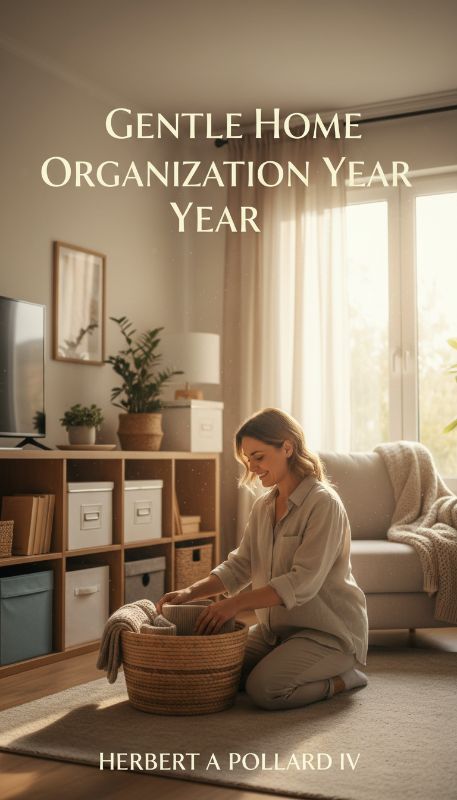
The Art of Gentle Home Organization
We live in a world that moves at an astonishing pace. Our days are often filled with endless to-do lists, digital notifications, and the persistent hum of responsibilities. Amid this whirlwind, our homes—those sacred spaces meant to offer comfort, rest, and rejuvenation—can quickly become overrun with clutter, chaos, and a sense of overwhelm. The idea of organizing one’s home can feel like an insurmountable feat, a project reserved only for the supremely disciplined or those with boundless free time. Yet, what if I told you that home organization could be a gentle, year-long journey rather than a frenzied, all-or-nothing sprint?
This book, Gentle Home Organization Year, is an invitation to approach the organization of your living space with kindness, patience, and intentionality. It is built on the belief that true transformation—especially within our homes—should never feel punishing, rushed, or anxiety-inducing. Instead, it should root itself in the slow, steady cultivation of habits, the nurturing of personal values, and the creation of systems that genuinely support the life you wish to lead.
Why “Gentle” Organization?
The word “gentle” is not chosen lightly. Too often, the prevailing narrative around organization is one of radical change: “Declutter your entire house in a weekend,” “Throw out everything that doesn’t spark joy,” or “Become a minimalist overnight.” While these methods work for some, for many people, they result in frustration, burnout, and a recurring cycle of clutter and guilt. A gentler approach recognizes that our relationship with our possessions, routines, and spaces is deeply personal and shaped by years—sometimes decades—of lived experience.
Gentle organization is about progress, not perfection. It’s about learning to listen to yourself, to honor your unique needs and rhythms, and to make choices that are sustainable in the long run. This philosophy respects that organization is not just about “stuff”—it’s about how our environment serves our well-being, our relationships, and our aspirations.
Tip: Gentle organization means making space for grace. It’s okay to go slowly, to make mistakes, and to start over as often as needed.
The Year-Long Journey
One of the foundations of this book is the idea that meaningful change takes time. Rather than promising instant results, Gentle Home Organization Year guides you through twelve months of manageable, focused projects. Each chapter corresponds to a different area of your home or aspect of organizational life, offering a comprehensive, step-by-step roadmap for transformation.
This year-long structure allows you to:
Focus deeply on one area at a time.
Develop habits that last beyond a single cleaning spree.
Reflect on what you truly need and value.
Avoid overwhelm by breaking projects into small, actionable steps.
Celebrate progress and recalibrate as needed.
Whether you are starting from scratch or simply looking to refine your existing systems, this approach meets you where you are. There is no judgment, no shame, and no pressure to keep up with anyone else’s timeline.
The Emotional Landscape of Clutter
Before we dive into the practicalities, it is essential to acknowledge the emotional weight that often accompanies clutter and disorganization. Our homes are more than collections of walls and furniture; they are repositories of memories, dreams, disappointments, and hopes. Each object, no matter how trivial it may seem, can carry emotional significance.
Inherited items may remind us of loved ones we have lost.
Gifts may linger out of obligation rather than genuine affection.
Aspirational purchases (the treadmill in the corner, the gourmet cookware) may represent who we wish we were, rather than who we are.
Paperwork, bills, and unopened mail may accumulate as silent reminders of tasks left undone, fueling anxiety or shame.
Recognizing these emotional undercurrents is vital. Throughout this book, you will learn not only practical strategies but also techniques to address the feelings that arise as you make decisions about what to keep, what to release, and how to create a home that truly supports you.
Reminder: You are not alone. Everyone wrestles with the emotional aspects of clutter. Be gentle with yourself as you embark on this journey.
What to Expect: Structure of the Book
To help you move from intention to action, this book is organized into the following components:
Monthly Focus: Each chapter centers on a major area of the home (or a core organizational theme), allowing for sustained attention and deep change.
Core Concepts: Key organizational principles tailored to the unique challenges of each space.
Practical Steps: Clear, actionable instructions to guide you from assessment to implementation.
Case Studies: Real-life examples to illustrate common challenges and successes.
Pitfalls to Avoid: Insights into common obstacles and how to navigate them.
Reinforcement Exercises: Simple practices to help you cement new habits and reflect on your progress.
By the end of the year, you will not only have transformed your physical environment, but also your mindset and relationship with your home.
Who Is This Book For?
Gentle Home Organization Year is for anyone who:
Feels overwhelmed by the prospect of organizing their home.
Has tried and “failed” at other organizational programs.
Wants to create sustainable systems that fit their unique lifestyle.
Values progress over perfection.
Is seeking a kinder, more mindful approach to decluttering and organizing.
Whether you live alone in a studio apartment, share a bustling family home, or are somewhere in between, the principles and practices contained within these pages can be adapted to your circumstances.
The Science and Spirit of Home Organization
While much of this book draws on practical wisdom and lived experience, it is also grounded in principles from psychology, behavioral science, and design thinking. Research shows that our environment profoundly impacts our mood, productivity, and overall health. Clutter has been linked to increased stress, reduced focus, and even physical health issues. On the other hand, organized spaces support clarity, creativity, and a sense of calm.
Yet, there is also a spiritual dimension to home organization. For centuries, traditions around the world have emphasized the importance of caring for one’s living space—not just for aesthetic reasons, but as a reflection of inner harmony and respect for oneself and one’s community. In embracing a gentle approach, you honor both the science and the spirit of creating a home that nourishes you.
The Power of Small Steps
One of the most powerful lessons in any transformation is the value of small, consistent actions. You do not need to overhaul your entire life overnight. Instead, you can embrace the wisdom of incremental progress:
Set aside ten minutes each day to tackle a drawer, a shelf, or a stack of papers.
Celebrate each small victory—a cleared counter, an organized closet, a new habit formed.
Allow yourself to pause, reflect, and adjust as you go.
The cumulative effect of these small steps is astonishing. Over the course of a year, what once felt impossible becomes manageable, even enjoyable.
Tip: The only “right” pace is the one that works for you. Trust your process.
Your Commitment to Yourself
As you begin this journey, I invite you to make a commitment—not to perfection or to someone else’s standards, but to yourself. Commit to approaching each step with curiosity, patience, and self-compassion. Commit to creating a home that supports your vision for your life, whatever that may be.
You will encounter challenges along the way. There will be moments of frustration, fatigue, or doubt. There may be times when progress feels slow or invisible. In these moments, remember that transformation is not linear. Each setback is an opportunity to learn, grow, and recommit to your path.
How to Use This Book
Read each chapter in sequence, or skip ahead to the areas that need your attention most.
Take notes, make lists, and reflect on the questions and exercises provided.
Share your progress with a trusted friend, family member, or support group.
Return to sections as needed—growth is a spiral, not a straight line.
Most importantly, give yourself permission to go at your own pace. This is your journey, and you are in the driver’s seat.
A New Beginning
If you are holding this book, you have already taken the first step. You have said “yes” to the possibility of a more peaceful, supportive, and beautiful home. Over the coming chapters, you will learn not only how to organize your space, but how to do so in a way that honors who you are and what you value most.
Welcome to your gentle year of home organization. Let’s begin—one step, one habit, and one room at a time.
Reminder: Perfection is not the goal. Progress, self-kindness, and a home that feels like a sanctuary—these are the measures of success on this journey.