In a world that often feels frenetic, loud, and uncertain, confidence seems like an elusive quality—either you have it, or you don’t. Yet, after decades of research, observation, and personal experience, I have come to understand that confidence is neither a birthright nor a matter of luck. Rather, it is a skill—one that can be cultivated, honed, and refined across a lifetime. The calm notes of confidence are not the brash declarations of arrogance, nor the fleeting highs of bravado. Instead, they are subtle, enduring, and deeply rooted in an inner clarity that we all possess the ability to nurture.
This book, The Calm Notes of Confidence, was born out of hundreds of conversations, thousands of written words, and countless quiet moments reflecting on what it means to stand strong, yet gentle, in the face of life’s demands. It is for those who seek to move through life with a sense of assurance that is at once powerful and peaceful; for those who wish to replace self-doubt with self-respect, not by shouting over their fears but by harmonizing with them.
The Myth of Instant Confidence
Too often, confidence is portrayed as a switch that can be flicked on with the right words, the right clothes, or the right job title. But anyone who has struggled with insecurity knows this is a myth. The truth is, confidence grows quietly. It builds up through consistent, mindful practice and by gently confronting our vulnerabilities rather than hiding them.
The calm notes in the title of this book are a deliberate metaphor. Much like the steady, soothing notes of a well-composed melody, true confidence is not jarring or overwhelming. It does not require bravado or the suppression of uncertainty. Instead, it is composed of small, steady moments where we choose to trust ourselves—sometimes in the face of fear, sometimes in defiance of past failures, and often, simply in the quiet of our own hearts.
Why Write This Book?
The journey to confidence is both deeply personal and universally relevant. Through my work as a non-fiction author and my professional experience in coaching individuals from all walks of life, I have witnessed that the struggle for confidence transcends age, gender, nationality, and profession. From high-powered executives to artists, from students to retirees, the longing for a steady, calm self-assurance is a common thread.
Yet, the world rarely pauses to teach us how to build this quality. Instead, we are bombarded with messages that tell us to “fake it till you make it,” or that confidence is only for the extroverted, the successful, or the favored. These narratives are not only harmful—they are simply untrue.
This book is written to dispel the myths and reveal the practical steps that anyone can take to develop a quiet, sustainable confidence. It is grounded in research, enriched with real stories, and filled with actionable exercises to help you internalize the principles discussed. As you journey through its pages, you will discover not only what confidence is but how to embody it authentically and calmly.
The Structure of This Book
The Calm Notes of Confidence is structured in a way that mirrors the journey of building authentic self-assurance:
Subsequent chapters dive into the foundational elements: self-awareness, self-compassion, and the role of mindset.
You will learn how to identify and reframe self-defeating beliefs, cultivate emotional resilience, and develop practical skills to speak and act with assurance.
Later chapters address confidence in specific contexts—such as in relationships, at work, and during times of adversity.
Each chapter concludes with practical exercises and reflection prompts to transform insights into lasting habits.
The book culminates in a comprehensive conclusion, drawing together the key lessons and emphasizing continuous growth.
Throughout, you’ll encounter case studies, real-life examples, and common pitfalls to avoid, ensuring that the concepts are not only understood intellectually but lived experientially.
The Quiet Power Within
Take a moment to consider the people you admire most. Chances are, their confidence does not manifest as loudness or self-promotion, but as a quiet, steadfast presence. They listen as much as they speak. They move with purpose, not haste. They are at ease with themselves—and, as a result, they put others at ease.
This is the quiet power that lies at the heart of confidence. It is not about being fearless; it is about being brave enough to act despite your fears. It is not about never failing; it is about learning to stand up again, with gentleness and determination, every time you fall.
Confidence is found in the calm notes—the pauses between actions, the silent affirmations, the moments when you choose self-respect over self-criticism. It is in choosing to show up, even when you are unsure. It is in the courage to say “I don’t know,” and the humility to learn. It is in the patience to listen deeply, both to others and to yourself.
Common Misconceptions
Before we embark on this journey together, it is important to address some of the most persistent misconceptions about confidence:
Confidence equals extroversion: Many believe that only outgoing, sociable people can be confident. In truth, confidence is not a personality type but a mindset. Introverts and extroverts alike can be deeply confident.
Confidence is arrogance: Arrogance is rooted in insecurity and the need to prove oneself superior. True confidence, by contrast, is humble and inclusive.
Confidence is constant: No one feels confident all the time. Even the most self-assured people have moments of doubt. The goal is not to eradicate self-doubt but to learn to move through it.
Confidence is innate: While some may appear naturally confident, everyone can cultivate confidence through reflection, practice, and perseverance.
Confidence requires perfection: Perfectionism is often a mask for insecurity. Real confidence embraces imperfection as part of growth.
As you read, keep these clarifications in mind. They will serve as touchstones, helping you separate myth from reality.
Building Your Confidence Toolkit
Each chapter of this book will offer you practical tools—exercises, questions, and habits—to help you develop your unique version of calm confidence. Here is what you can expect:
Self-awareness practices to help you understand your strengths, values, and automatic thought patterns.
Mindset shifts to reframe how you view challenges, mistakes, and criticism.
Communication techniques that foster assertiveness without aggression.
Strategies for overcoming setbacks and bouncing back with greater resilience.
Mindfulness and self-compassion exercises to quiet the inner critic and nurture self-acceptance.
Guidance on setting boundaries and saying no, enabling you to protect your energy and prioritize your needs.
You are encouraged to approach these tools not as quick fixes, but as ongoing practices that will deepen and evolve over time.
Your Journey Begins Here
As you turn these pages, I invite you to do so with curiosity and patience. Confidence is not a destination but a journey—a melodic progression, each note building upon the last. There will be moments of clarity and moments of confusion, times when progress feels swift and times when it feels painstakingly slow.
Trust in the process. The greatest transformations often occur quietly, beneath the surface, before they become visible to the world.
Tip: As you read, keep a journal to record your thoughts, insights, and progress. Small, consistent reflections will amplify your growth and help you internalize the teachings of each chapter.
Let us begin this journey together—not in pursuit of the loud, fleeting highs of bravado, but in search of the enduring, calm notes of confidence that will accompany you through every season of life.
In the coming chapters, you will find guidance, inspiration, and actionable wisdom to help you unlock your fullest, most confident self. With each page, you will move closer to a life marked by steadiness, courage, and calm assurance. Welcome to The Calm Notes of Confidence.
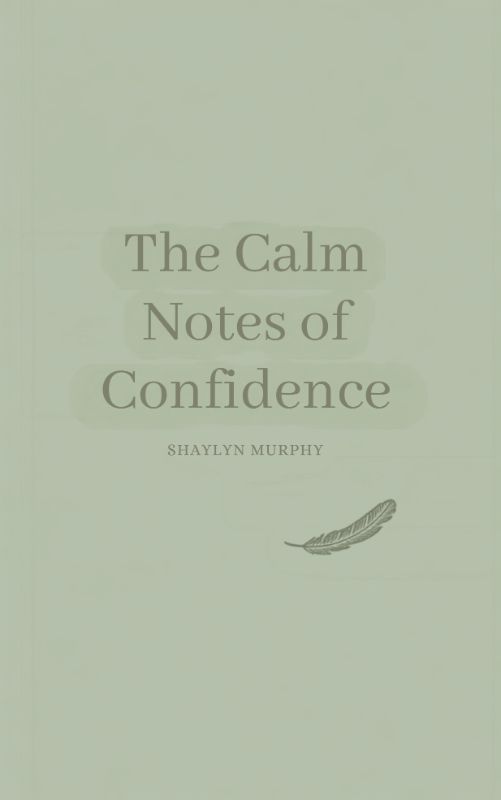
The Calm Notes of Confidence by Shaylyn MurphyV | BookBazaar